

Daily Matcha Ritual for Stress: Calm Focus Guide
Table of Contents
- Why a Daily Matcha Ritual for Stress Works
- L-Theanine and Stress Reduction: The Science Behind the Calm
- Benefits of JAS Certified Organic Matcha for Daily Calm
- How to Whisk Matcha for Beginners: A Step-by-Step Guide
- Building the Habit: Habit-Stacking and Sensory Grounding
- Matcha vs Coffee: Nervous System Support and Sustained Energy
- Timing, Contraindications and Choosing Your Tools
- Frequently Asked Questions
Last Updated: September 13, 2026
Why a Daily Matcha Ritual for Stress Works
A daily matcha ritual for stress works because it pairs a physiologically calming compound with a deliberate, repetitive sequence of actions. The caffeine in matcha releases slowly, while the amino acid L-theanine promotes relaxed alertness. Together they produce what practitioners describe as calm focus rather than a spike-and-crash cycle.
Here is the part most guides miss: the ritual itself carries as much weight as the chemistry. A Harvard Health overview of meditation and the stress response explains that repetitive, focused practices help regulate the nervous system. Whisking matcha is exactly that: a short, sensory, repeatable act. The bowl, the whisk, the steam, the colour. You are giving your body a predictable cue that the pace is slowing down.
This guide from Whisk Away Matcha covers the science, the preparation, the habit-building and the timing, so you can build a practice that lasts beyond the first enthusiastic week.

L-Theanine and Stress Reduction: The Science Behind the Calm
L-theanine is an amino acid found almost exclusively in tea leaves, and it is the compound responsible for matcha's characteristic calm alertness. It crosses into the brain and encourages alpha wave activity, the pattern associated with relaxed but wakeful states.
The synergy matters more than either ingredient alone. Caffeine sharpens attention; L-theanine softens the edges of that stimulation. Many people find the combination produces steadier focus than coffee, with less of the edginess that comes from overstimulation.
Matcha delivers these compounds differently from steeped green tea because you consume the whole leaf, suspended in water. Nothing is discarded, so the amino acids and catechins come with it.
Benefits of JAS Certified Organic Matcha for Daily Calm
JAS Certified Organic matcha is matcha grown and processed to the Japanese Agricultural Standard for organic production, which restricts synthetic pesticides and fertilisers across the entire supply chain. For a daily practice, that consistency matters: you are drinking the whole leaf, so what is on the leaf ends up in your cup.
Whisk Away Matcha sources its matcha directly from Kagoshima and Uji, two of Japan's most respected tea-growing regions. The leaves are shade-grown, then stone-ground to preserve the natural goodness of the whole leaf. That is the practical difference between a matcha you look forward to and one you tolerate.
What most reviews miss is how much grade affects taste. A bitter, chalky cup is usually a lower grade or an older powder, not a sign that matcha is not for you. Ceremonial grade, sifted before whisking, tastes smooth and vegetal with minimal bitterness.
- Shade-grown: boosts the amino acid content that supports calm focus
- Stone-ground: slower, cooler grinding protects flavour and aroma
- JAS Certified Organic: verified organic status from farm to finished tin
How to Whisk Matcha for Beginners: A Step-by-Step Guide
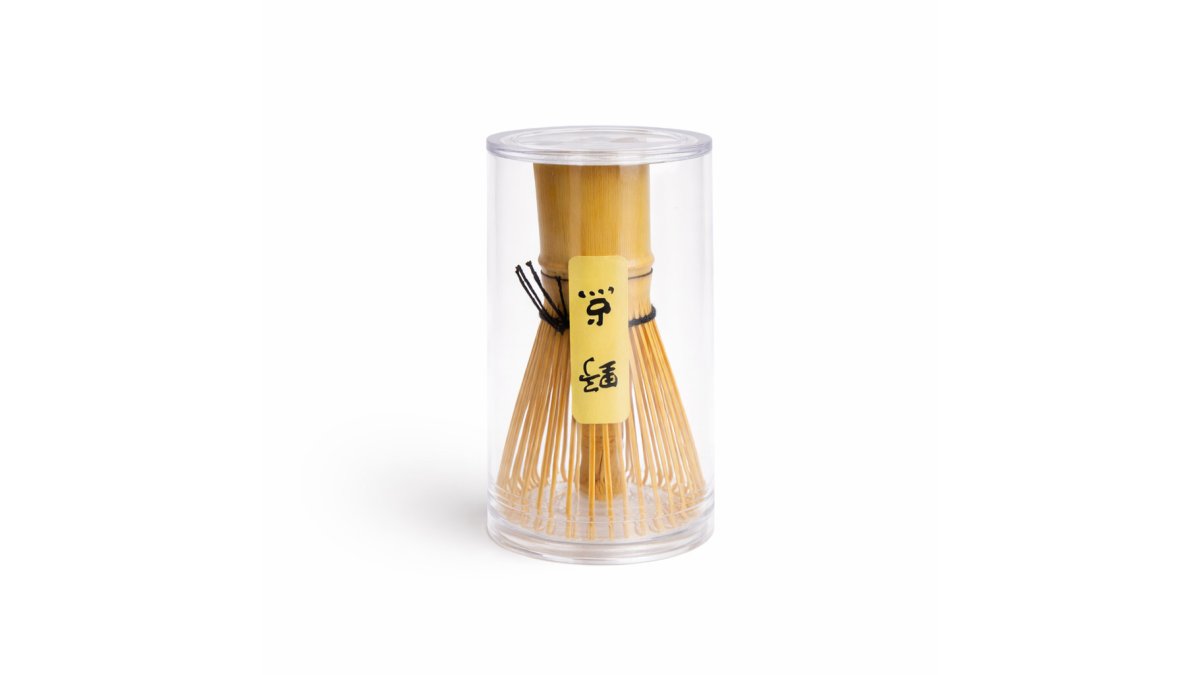
Whisking matcha properly takes about two minutes once you have the rhythm. The goal is a smooth, frothy bowl with no clumps, achieved with a bamboo whisk called a chasen and water that is hot but not boiling.
What you'll need: matcha powder, a bamboo whisk, a wide bowl, a small sieve, and a kettle.
- Sift 1 to 2 grams of matcha into your bowl. Skipping this step is the most common cause of clumps.
- Heat water to roughly 80°C. Boiling water scalds the powder and turns it bitter.
- Add about 60 to 70 ml of water and whisk in a fast W or M motion from the wrist, not the arm.
- Whisk for 15 to 20 seconds until a fine foam forms across the surface.
- Drink it slowly, holding the bowl with both hands if you can. This is the ritual, not just the preparation.
If you are coming from coffee, expect the first few bowls to taste stronger than you anticipate. Adjust the powder down, not the water temperature up.

Building the Habit: Habit-Stacking and Sensory Grounding
Most guides tell you to "make it a habit" and stop there. That is the weakest instruction in wellness writing, because habits do not form from intention, they form from a stable cue, a short action, and an immediate reward. Habit-stacking is the practical version of that loop, and it is the single most reliable way to make a matcha ritual survive past week two.
The method is simple: attach the new behaviour to something you already do without thinking. You are not finding a new slot in your day; you are borrowing an anchor that already fires on schedule.
Concrete anchors that work well:
- After you boil the kettle for breakfast. The kettle is already the cue; the matcha rides the same action.
- Immediately after your morning shower. A sensory boundary between waking up and starting work.
- The moment you sit down at your desk. A two-minute buffer before the first email.
- After you let the dog out or feed the cat. A daily, non-negotiable trigger.
Anchors that tend to fail:
- "When I feel stressed." Stress is not a scheduled cue, so the ritual never gets a consistent trigger.
- "Before bed." Caffeine timing works against you here (see the timing section below).
- "When I remember." Memory is not a habit; it is a hope.
A useful rule of thumb: if you cannot name the exact moment your bowl happens, the anchor is too vague. Write it as a sentence, After I pour my breakfast coffee, I will whisk one bowl of matcha, and keep it visible for the first fortnight.
The sensory grounding sequence
Habit-stacking gets you to the bowl. Sensory grounding is what turns the bowl into a stress-relief practice rather than a caffeine delivery method. The idea is to deliberately route attention through your senses during the two minutes of whisking, so the nervous system gets a predictable, low-stakes input instead of the day's noise.
As you whisk, work through four anchors in order:
- Sound. Listen to the bamboo tines against the bowl, a dry, rapid rustle. This is the first cue that the pace is changing.
- Colour. Notice the vivid, opaque green of the powder and then the paler foam as it forms. Colour is the fastest sensory channel to register "this is different from the rest of my morning."
- Warmth. Feel the heat through the ceramic in both hands. Holding the bowl with two hands is not decorative, it is a physical signal of pause.
- Smell. Breathe in the steam before the first sip. Matcha's aroma is grassy and slightly sweet; noticing it slows the transition from whisking to drinking.
You are not trying to empty your mind. You are giving it four specific, repeatable things to notice. That is mindfulness in its most practical form, and it takes seconds, which is exactly why it survives a busy morning.
If you miss a day, do not restart the streak. Just return to the anchor the next morning. The ritual is the repetition, not the record.
Matcha vs Coffee: Nervous System Support and Sustained Energy
Matcha supports the nervous system differently from coffee, largely because of how the caffeine is delivered. Coffee gives you a fast rise and a correspondingly fast drop. Matcha's caffeine is bound to the leaf's other compounds, so it enters the bloodstream more gradually.
| Factor | Matcha | Coffee |
|---|---|---|
| Caffeine release | Gradual, sustained | Rapid spike |
| L-theanine | Naturally present | Not present |
| Typical crash | Muted | Common mid-afternoon |
| Ritual element | Whisking, bowl, pause | Brewing, often rushed |
| Best for | Steady focus, calm | Fast wake-up |
If you need to be alert in five minutes, coffee still wins. If you want to work steadily through a long morning without the third espresso, matcha is the better fit. Many people land on a hybrid: coffee early, matcha mid-morning.
Timing, Contraindications and Choosing Your Tools
Timing is the part of a matcha ritual that most guides skip, and it is the part that most often decides whether the practice helps your stress or quietly adds to it. A bowl that lands too late in the day can fragment sleep, and poor sleep is one of the most reliable stressors there is.
When to drink, and when to stop
Matcha contains caffeine, and because you consume the whole leaf, a single bowl delivers a meaningful dose, commonly cited as roughly 30 to 70 mg per gram of powder, depending on grade and preparation. That is less than a typical espresso, but it is not nothing, and it arrives with L-theanine rather than instead of caffeine.
A practical rule for most people:
- Morning to early afternoon suits the majority of routines. Pair it with your chosen habit anchor.
- A common cut-off is early-to-mid afternoon, many sensitive drinkers find anything after roughly 2 pm affects how easily they fall asleep.
- If you are particularly caffeine-sensitive, treat midday as your ceiling and keep the bowl small (1 g rather than 2 g).
- If you are new to matcha, start with one bowl a day for a week before considering a second. Tolerance to caffeine varies widely between individuals.
The reason this matters for stress specifically: caffeine has a half-life of several hours, so a late bowl can still be active at bedtime even if you do not feel "wired." The result is lighter, more fragmented sleep, which then shows up as next-day irritability and a stronger craving for more stimulant. The ritual is meant to interrupt that loop, not feed it.
Contraindications worth stating plainly
Matcha is a food, not a treatment. A few cautions are worth knowing before you make it daily:
- Iron absorption. The catechins in tea can bind iron and reduce how much you absorb from a meal. If you are prone to low iron, leave a gap of about an hour between your bowl and iron-rich meals, and avoid drinking matcha alongside them.
- Pregnancy and breastfeeding. Caffeine intake guidance applies. Speak with your doctor or midwife about a suitable limit before making matcha a daily habit.
- Heart conditions and caffeine-interacting medications. If you manage a heart condition or take medication that interacts with caffeine, check with your doctor first.
- Anxiety and diagnosed conditions. Matcha is a supportive practice, not a substitute for care. If you are being treated for an anxiety disorder, tell your clinician that you are adding a caffeinated drink to your routine.
None of this is a reason to avoid matcha. It is a reason to drink it deliberately, which is, after all, the point of a ritual.
Choosing tools without overspending
The wellness industry would have you believe a ritual requires a handmade bowl and a ceremonial-grade tin. It does not. The essentials are a whisk and a wide bowl, and both can be found cheaply.
Budget-friendly starting kit:
- A bamboo whisk (chasen). A basic one costs very little and does the job. Rinse it in warm water only, never soap, and stand it on its tines to dry so it keeps its shape.
- A wide, deep bowl. A cereal bowl works. You want width for the whisk to move and depth to contain the splash.
- A small fine sieve. This is the single upgrade that most improves texture, because it breaks up clumps before they hit the water. A standard kitchen strainer is fine.
- A kettle with temperature control, or a thermometer. If you do not have one, boil and then let the water rest for a minute or two before pouring.
Where money is worth spending, if you choose to:
- Powder quality. Grade and freshness affect taste far more than equipment. A bitter, chalky cup is usually a lower grade or an older powder, not a sign that matcha is not for you.
- A proper bowl and whisk if you plan to keep the practice long-term. Whisk Away Matcha's Bamboo Matcha Whisk is built for daily use, and a bowl such as the Paola Matcha Bowl gives you the width and depth needed for a smooth whisk. If you want a single starting point, Whisk Away Matcha is JAS Certified Organic and stone-ground from whole shade-grown leaves.
Frequently Asked Questions
Does matcha help relieve stress?
Matcha contains L-theanine, an amino acid that supports calm focus by encouraging alpha brain wave activity. Combined with a small amount of caffeine, it provides gentle, sustained energy rather than a spike and crash. Many people find a daily matcha ritual helps them feel more grounded and less reactive to stress. Individual responses vary, so start with one cup and notice how your body responds over a week.

How long does it take to feel the calming effects of matcha?
Most people notice a sense of calm focus within 30 to 60 minutes of drinking matcha. The L-theanine is absorbed relatively quickly, while the caffeine releases more slowly than coffee. The cumulative benefits of a daily matcha ritual for stress tend to build over one to two weeks of consistent practice, especially when paired with the mindful preparation steps of whisking and sifting.
Can I drink matcha if I have anxiety?
Many people with anxiety find matcha gentler than coffee because the L-theanine buffers the caffeine. However, matcha still contains caffeine, roughly 30 to 50mg per serve, so if you are sensitive or taking medication, speak with your GP before making it a daily habit. Start with a smaller serve and avoid drinking it late in the day, as sleep disruption can worsen anxiety.
Is JAS certified organic matcha better for stress reduction?
JAS certification confirms the matcha is grown and processed to Japanese organic standards, which means no synthetic pesticides or fertilisers. While the certification itself does not directly reduce stress, organic matcha supports a cleaner daily ritual. Choosing a certified organic product also gives you confidence in purity and sourcing, which matters when you are drinking matcha every day as part of a wellness routine.
Building a daily matcha ritual for stress is less about willpower and more about removing friction: the right powder, the right tools, and a trigger you already keep. Whisk Away Matcha makes that easier with JAS Certified Organic, stone-ground matcha sourced directly from Kagoshima and Uji, Australian-owned and built around a slower, more intentional cup. Get started with Whisk Away Matcha and give yourself two quiet minutes each morning.