

How to Make Matcha Tea for Beginners: A Calm Guide
Table of Contents
- What You'll Need to Make Matcha Tea
- Step-by-Step: How to Make Matcha Tea for Beginners
- Best Water Temperature for Matcha (And Why It Matters)
- Why Does My Matcha Have Clumps After Whisking?
- How to Store Matcha Powder to Keep It Fresh
- Common Beginner Mistakes and How to Fix Them
- Conclusion
- Frequently Asked Questions
Last Updated: September 19, 2026
What You'll Need to Make Matcha Tea
Learning how to make matcha tea for beginners starts with a simple truth: good matcha needs very little equipment, but the right tools make a real difference.
Matcha is finely stone-ground green tea powder made from whole, shade-grown tea leaves. You whisk it into hot water rather than steeping and straining it.
Here is what to gather before you start.
Essential Tools for Beginners
A chasen (bamboo whisk), a wide bowl, and a fine mesh strainer cover the basics. The whisk's flexible tines break up powder and build foam in a way a spoon cannot.
Our Bamboo Matcha Whisk is built for daily use and creates smooth, even froth from natural bamboo tines. A wooden strainer does the same job for sifting.

A chawan (matcha bowl) gives you room to whisk without splashing. The Paola Matcha Bowl has a wide base and a smooth glaze that suits beginners and long-time drinkers alike.

No whisk yet? A fine mesh strainer and a milk frother will get you close.
Choosing Your Matcha Powder
Ceremonial grade matcha is whisked with water alone. Culinary grade is blended into lattes, smoothies, and baking.
For a first bowl, buy ceremonial grade.
Step-by-Step: How to Make Matcha Tea for Beginners
Here is the full process, start to finish. It takes about three minutes once you have done it twice.
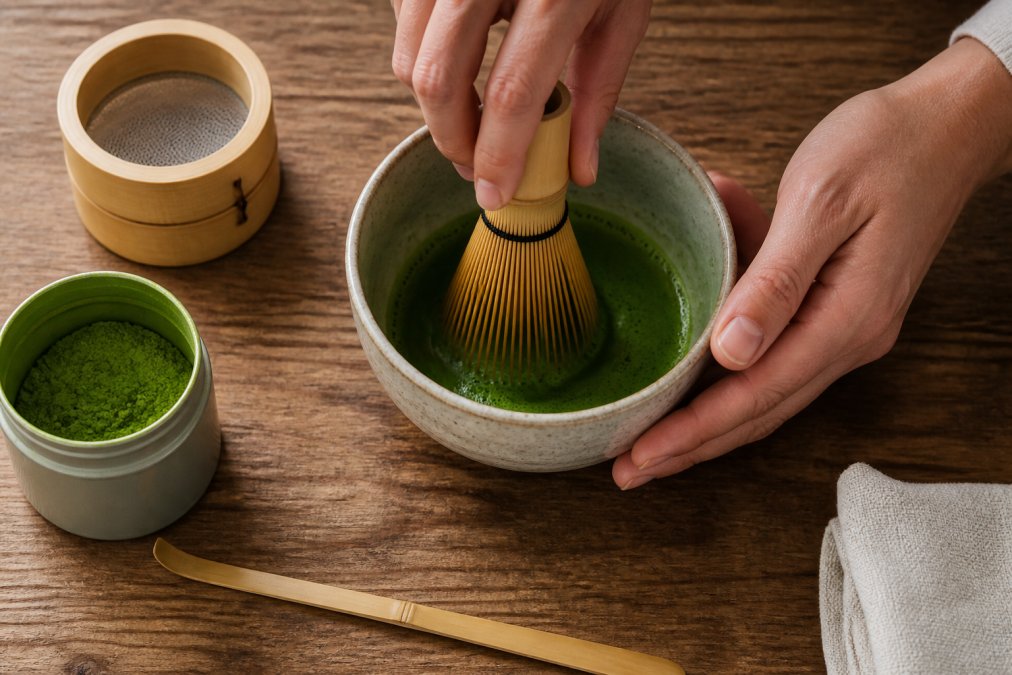
What you'll need:
- 1 teaspoon (about 2 grams) matcha powder
- 60-70ml hot water
- Bamboo whisk and bowl
- Fine mesh strainer
Step 1: Sift Your Matcha Powder
Sifting removes clumps before they reach the water. Press the powder through a fine mesh strainer into your bowl.
Step 2: Heat Your Water to the Right Temperature
Heat water to roughly 80°C. Let a freshly boiled kettle sit for two to three minutes, or pour boiling water between two cups to cool it.
Step 3: Whisk in a W-Pattern Until Frothy
Pour the water over the powder, then whisk briskly in a W-pattern for 15 to 20 seconds. Move the whisk back and forth, not in circles.
Best Water Temperature for Matcha (And Why It Matters)
The best water temperature for matcha sits between 75°C and 80°C. This range dissolves the powder fully without drawing out bitterness.
- Boil the kettle, then wait two to three minutes
- Or pour the water between two cups three times
- Or add a splash of cool water to the bowl first
Water Quality: The Variable Most Guides Ignore
Temperature is only half the story. The water itself changes how matcha tastes, and almost no beginner guide mentions it.
- Mineral content. Hard water, high in calcium and magnesium, binds to the tea's compounds and mutes the umami sweetness. It also makes foam harder to build because the minerals interfere with the surface tension that holds bubbles together. Soft water lets the flavour come through cleanly and froths more readily.
- pH level. Water that is slightly alkaline dulls the bright green flavour. Water that is slightly acidic or neutral tends to keep the taste sharper and more vegetal.
- Filter your water. A standard jug filter removes some of the excess minerals that flatten the taste.
- Avoid heavily mineralised bottled water. Some mineral waters are marketed as premium but are too hard for matcha.
- Taste your tap water first. If it tastes strongly of chlorine or chalk, that will carry straight into the bowl.
- Do not use distilled water. It is too flat and produces a thin, lifeless bowl.
A Quick Temperature and Water Checklist
- Heat to 75-80°C, never above 85°C
- Use filtered or soft water where possible
- Skip distilled and heavily mineralised bottled water
- Whisk iced matcha from a hot paste, then dilute cold
- Keep your water source consistent so you can taste the difference when you change powder
Why Does My Matcha Have Clumps After Whisking?
Clumps after whisking usually mean the powder was not sifted, the water was too cool, or the whisk did not reach the bottom of the bowl. Fixing any one of those three solves most cases.
Work through this checklist when lumps appear:
- Sift first. A fine mesh strainer breaks up static and clumps before they form.
- Check your water. Cool water cannot wet the powder properly.
- Whisk the base. Angle the whisk down and lift the powder off the bottom.
- Use enough water. Too little water leaves a thick paste that will not blend.
- Whisk longer. Twenty seconds of fast W-motion beats ten seconds of slow stirring.
How to Store Matcha Powder to Keep It Fresh
Store matcha in a sealed tin in a cool, dark place, then move it to the fridge after opening. Light, heat, and air cause oxidisation, which dulls the colour and flattens the taste.
Keep these points in mind:
- Press the lid down fully every time you open the tin
- Keep the tin away from the stove, kettle, and window
- Let the tin come to room temperature before opening it if it lives in the fridge
- Buy smaller tins if you drink matcha a few times a week, not daily
Common Beginner Mistakes and How to Fix Them
Most first attempts fail for the same handful of reasons. None of them are hard to correct once you know what to look for.
Problem |
Likely Cause |
Fix |
|---|---|---|
Bitter taste |
Water too hot |
Cool to 75-80°C |
Clumps in the bowl |
No sifting |
Use a fine mesh strainer |
Weak, watery bowl |
Too much water |
Use 60-70ml per teaspoon |
Flat, no foam |
Slow whisking |
Whisk fast in a W-pattern |
Gritty texture |
Old or low-grade powder |
Buy fresh ceremonial grade |
Dull colour |
Poor storage |
Seal and refrigerate after opening |
Foam collapses fast |
Bowl too wide or shallow |
Use a deeper, narrower bowl |
Chalky aftertaste |
Over-whisking or metal tools |
Stop at 20 seconds, use bamboo |
Diagnosing by Symptom
Work backwards from what went wrong:
- Bitter and astringent. Water was too hot, or you used too much powder. Drop the temperature and measure your scoop rather than eyeballing it.
- Lumpy and dry at the bottom. The powder was not sifted, or the whisk never reached the base of the bowl. Sift first, then angle the whisk down.
- Thin and pale. Too much water for the amount of powder, or the powder is old. Tighten the ratio before you blame your technique.
- No foam at all. Slow, circular stirring. Foam comes from fast back-and-forth motion, not from speed alone.
- Foam that vanishes in seconds. A wide, shallow bowl lets the bubbles break up. A deeper bowl holds them longer.
If you are coming from coffee, expect a different kind of lift. Matcha releases its caffeine slowly as you digest the whole leaf, so the energy arrives gradually and holds steadier than an espresso.
No Bamboo Whisk? Here Is What Works
A traditional chasen gives the best foam, but beginners often want to try matcha before buying one. These alternatives get you close:
- Milk frother. A handheld electric frother works well if you sift first and keep the speed moderate. It builds foam fast but can whip in larger air pockets, so the texture is slightly coarser than a bamboo whisk.
- Mason jar. Add powder and water, seal, and shake hard for 15-20 seconds. This is the cheapest option and produces a decent, if less refined, foam. Sift first or you will get clumps.
- Fine mesh strainer plus a spoon. Sift the powder directly into the bowl, add water, then stir briskly. You will get a smooth drink but almost no foam.
Conclusion
The gap between a bitter, lumpy bowl and a smooth, frothy one comes down to three small habits: sift the powder, cool the water, and whisk fast in a W-pattern. Everything else is practice.
Frequently Asked Questions
What is the correct way to make matcha tea?
Sift 1 teaspoon of matcha powder into a bowl to remove clumps. Heat water to about 80°C (175°F) - never boiling. Pour a small amount of water over the powder and whisk in a W-pattern until a smooth paste forms, then add the rest of the water and whisk vigorously until frothy. Drink immediately for the best flavour and texture.
Do I mix matcha with milk or water?
Traditional matcha tea is whisked with hot water only. For a latte, whisk the matcha with a small amount of water first to create a smooth paste, then add steamed milk. This method prevents clumps and gives you a creamier texture. Both ways work well - it depends on whether you want a pure tea experience or a milk-based drink.
Why does my matcha have clumps after whisking?
Clumps usually happen for three reasons: you skipped sifting the powder, your water was too hot or too cold, or you didn't whisk fast enough. Sifting through a fine mesh strainer breaks up static and lumps before they hit the water. Water around 80°C helps the powder dissolve evenly, and a brisk W-pattern motion keeps particles in suspension rather than clumping together.
What temperature should water be for matcha?
The best water temperature for matcha is around 80°C (175°F). Water that is too hot scalds the delicate tea leaves and brings out harsh bitterness. Water that is too cool leaves the powder undissolved and gritty. If you do not have a thermometer, boil the kettle and let it sit for 3 to 5 minutes before pouring. The water should feel hot but not steaming aggressively.